Blog

Our blog provides updates on important news and developments around Open Risk, and a running commentary on external developments when related to our mission. You can view posted articles either here in reverses chronological order, from the front-page or by selecting the relevant post tag from the right column.

Archive

Our archive page groups blog entries chronologically by year.


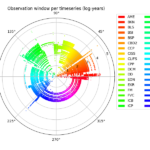
What do people talk about at FOSDEM 2020

What do people talk about at FOSDEM 2020

FOSDEM means Free and Open Source Software Developers European Meeting

Reading Time: 4 min.

What do people talk about at FOSDEM 2020

Introduction

FOSDEM is a non-commercial, volunteer-organized European event centered on free and open-source software development. It is aimed at developers and anyone interested in the free and open-source software movement. It aims to enable developers to meet and to promote the awareness and use of free and open-source software. FOSDEM is held annually since 2001, usually during the first weekend of February, at the Université Libre de Bruxelles Solbosch campus in the southeast of Brussels, Belgium. The history of FOSDEM is neatly available at Wikipedia, while the current conference (2020) website is available here.

Making Open Risk Data easier

Making Open Risk Data easier

We introduce an online database that allows the (relatively) easy publication of structured risk data

Reading Time: 1 min.

Making Open Risk Data easier

In an earlier blog post we discussed the promise of Open Risk Data and how the widespread availability of good information that is relevant for risk management can substantially help mitigate diverse risks.

The list of Open Risk Data providers, particularly from public sector, keeps increasing and we are aiming to document all available datasets in the dedicated page of the Open Risk Manual.

NACE Classification and the EU Sustainable Finance Taxonomy

NACE Classification and the EU Sustainable Finance Taxonomy

Reading Time: 1 min.

The integration of climate risk and broader sustainability constraints into risk management is a monumental task and many tools are still lacking. Yet there is strong support and bold initiatives from policy bodies and an increasing focus from the private sector side.

Risk Model Ontology

Risk Model Ontology

Reading Time: 2 min.

Semantic Web Technologies

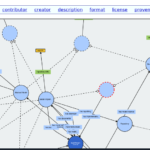
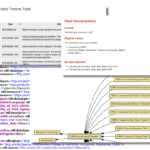
The Risk Model Ontology is a framework that aims to represent and categorize knowledge about risk models using semantic web information technologies.

In principle any semantic technology can be the starting point for a risk model ontology. The Open Risk Manual adopts the W3C’s Web Ontology Language (OWL). OWL is a Semantic Web language designed to represent rich and complex knowledge about things, groups of things, and relations between things. OWL is a computational logic-based language such that knowledge expressed in OWL can be exploited by computer programs, e.g., to verify the consistency of that knowledge or to make implicit knowledge explicit. OWL documents, known as ontologies, can be published in the World Wide Web and may refer to or be referred from other OWL ontologies. OWL is part of the W3C’s Semantic Web technology stack, which includes RDF, RDFS, SPARQL, etc

Federated Credit Risk Models

Federated Credit Risk Models

Reading Time: 4 min.

The motivation for federated credit risk models

Federated learning is a machine learning technique that is receiving increased attention in diverse data driven application domains that have data privacy concerns. The essence of the concept is to train algorithms across decentralized servers, each holding their own local data samples, hence without the need to exchange potentially sensitive information. The construction of a common model is achieved through the exchange of derived data (gradients, parameters, weights etc). This design stands in contrast to traditional model estimation where all data reside (or are brought into one computational environment).

A new logo for the Open Risk Manual

A new logo for the Open Risk Manual

Reading Time: 0 min.

A new logo for the Open Risk Manual

We have updated the logo for the Open Risk Manual.

The new logo aims to make more explicit both the inspiration that the Open Risk Manual project draws from the trail-blazing Wikipedia initiative (and increasing collection of associated Wikimedia projects) and the reliance on the open source ecosystem of software and tools, including the mediawiki software and the important semantic mediawiki extension.

An overview of EU Financial Regulation initiatives

An overview of EU Financial Regulation initiatives

Reading Time: 1 min.

An overview of EU Financial Regulation initiatives

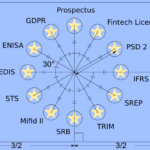
In the European Union there are several ongoing large scale legislative and regulatory projects that transform the context within which individual, firms and the public sector interact economically. While financial and regulatory reform is an ongoing process in all jurisdictions globally, the size and supra-national nature of the European Union makes those projects particularly interesting.

Overview of the Julia-Python-R Universe

Overview of the Julia-Python-R Universe

We introduce a side-by-side review of the main open source ecosystems supporting the Data Science domain: Julia, Python, R, the trio sometimes abbreviated as Jupyter

Reading Time: 3 min.

Overview of the Julia-Python-R Universe

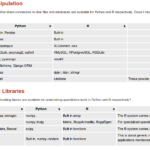
A new Open Risk Manual entry offers a side-by-side review of the main open source ecosystems supporting the Data Science domain: Julia, Python, R, sometimes abbreviated as Jupyter.

Motivation

A large component of Quantitative Risk Management relies on data processing and quantitative tools ( aka Data Science ). In recent years open source software targeting Data Science finds increased adoption in diverse applications. The overview of the Julia-Python-R Universe article is a side by side comparison of a wide range of aspects of Python, Julia and R language ecosystems.

Data Quality and Exploratory Data Analysis using Python

Data Quality and Exploratory Data Analysis using Python

Reading Time: 0 min.

Data Quality and Exploratory Data Analysis using Python

In two new Open Risk Academy courses we figure step by step how to use python to work to review risk data from a data quality perspective and how to perform exploratory data analysis with pandas, seaborn and statsmodels:

What constitutes a good risk taxonomy?

What constitutes a good risk taxonomy?

Reading Time: 4 min.

What is a Risk Taxonomy?

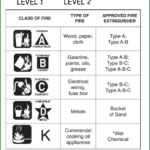
There are various formal definitions of risk taxonomies (and we will go over those below), but it might be useful to first look at a very intuitive example of a risk taxonomy: the classification of fire hazards (also known as fire classes)

The limits and risks of risk limits

The limits and risks of risk limits

Reading Time: 2 min.

Limit frameworks are fundamental tools for risk management

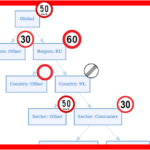
A Limit Framework is a set of policies used by financial institutions (or other firms that actively assume quantifiable risks) to govern in a quantitative manner the maximum risk exposure permitted for an individual, trading desk, business line etc.

Open Source Securitisation

Open Source Securitisation

Reading Time: 5 min.

Open Source Securitisation

Motivation

After the Great Financial Crisis securitisation has become the poster child of a financial product exhibiting complexity and opaqueness. The issues and lessons learned post-crisis were many, involving all aspects of the securitisation process, from the nature and quality of the underlying assets, the incentives of the various agents involved and the ability of investors to analyze the products they invested in. While the most egregious complications involved various types of re-securitisation and/or the interplay of structured credit derivatives undoubtedly even vanilla securitisation structure has a considerable amount of business logic.

Visualization of large scale economic data sets

Visualization of large scale economic data sets

Reading Time: 3 min.

Visualization of large scale economic data sets

Economic data are increasingly being aggregated and disseminated by Statistics Agencies and Central Banks using modern API’s (application programming interfaces) which enable unprecedented accessibility to wider audiences. In turn the availability of relevant information enables more informed decision-making by a variety of actors in both public and private sectors. An excellent example of such a modern facility is the European Central Bank’s Statistical Data Warehouse (SDW), an online economic data repository that provides features to access, find, compare, download and share the ECB’s published statistical information.

Machine learning approaches to synthetic credit data

Machine learning approaches to synthetic credit data

Reading Time: 9 min.

The challenge with historical credit data

Historical credit data are vital for a host of credit portfolio management activities: Starting with assessment of the performance of different types of credits and all the way to the construction of sophisticated credit risk models. Such is the importance of data inputs that for risk models impacting significant decision-making / external reporting there are even prescribed minimum requirements for the type and quality of necessary historical credit data.

Stressing Transition Matrices

Stressing Transition Matrices

Reading Time: 1 min.

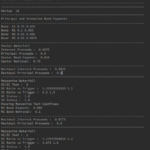
Release of version 0.4.1 of the transitionMatrix package focuses on stressing transition matrices

Further building the open source OpenCPM toolkit this release of transitionMatrix features:

  1. Feature: Added functionality for conditioning multi-period transition matrices
  2. Training: Example calculation and visualization of conditional matrices
  3. Datasets: State space description and CGS mappings for top-6 credit rating agencies
Release 0.4 of transitionMatrix adds Aalen-Johansen estimators

Release 0.4 of transitionMatrix adds Aalen-Johansen estimators

Reading Time: 0 min.

Release of version 0.4 of the transitionMatrix package

Further building the open source OpenCPM toolkit this release of transitionMatrix features:

  1. Feature: Added Aalen-Johansen Duration Estimator
  2. Documentation: Major overhaul of documentation, now targeting ReadTheDocs distribution
  3. Training: Streamlining of all examples
  4. Installation: Pypi and wheel installation options
  5. Datasets: Synthetic Datasets in long format

Enjoy!

Comparing IFRS 9 and CECL provision volatility

Comparing IFRS 9 and CECL provision volatility

Reading Time: 8 min.

Is the IFRS 9 or CECL standard more volatile? Its all relative

Objective

In this study we compare the volatility of reported profit-and-loss (PnL) for credit portfolios when those are measured (accounted for) following respectively the IFRS 9 and CECL accounting standards.

The objective is to assess the impact of a key methodological difference between the two standards, the so-called Staging approach of IFRS 9. There are further explicit differences in the two standards. Importantly, given the standards are not prescriptive, it is very likely that there will be material differences in interpretation and implementation of the principles (for example on the nature and construction of scenarios). In this study we perform a controlled comparison adopting a ‘ceteris-paribus’ mentality: We assume that all other implementation details are similar and we focus on the impact of the Staging approach.