Portfolio Management

Integrating the IPCC Emissions Factors Database Into Equinox

Integrating the IPCC Emissions Factors Database Into Equinox

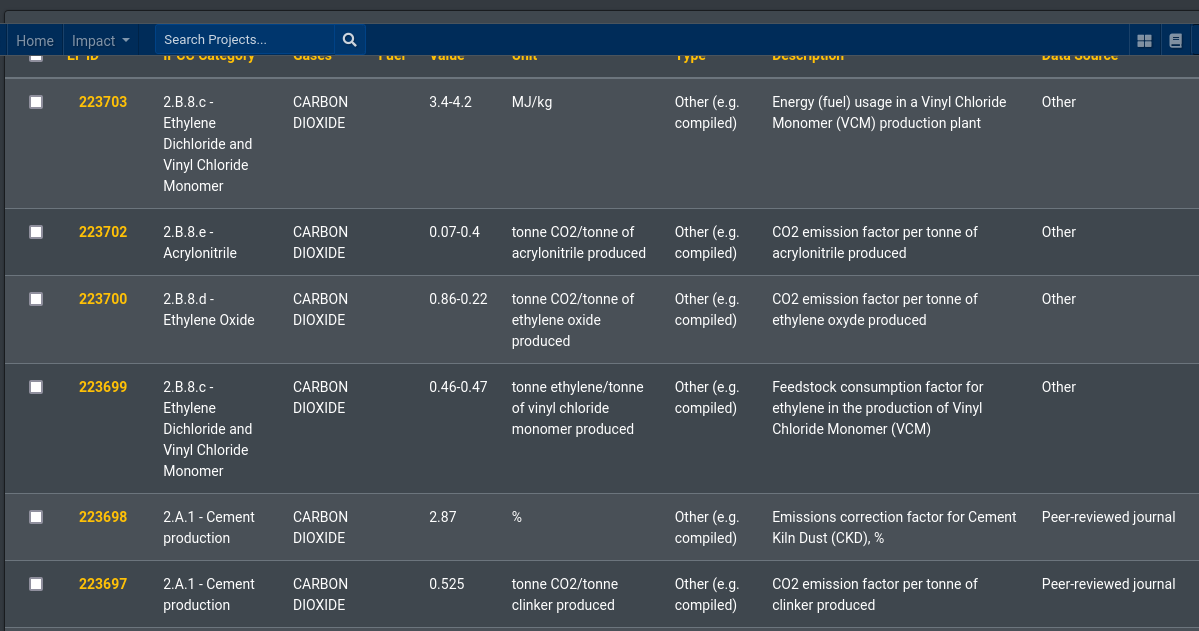
In the latest update of the Equinox Project we discuss the integration of reference data an in particular greenhouse gas emissions factors as catalogued in the IPCC Emissions Factors database (EFDB).
Reading Time: 2 min.

Equinox is an open source platform that supports the holistic risk management and reporting of major sustainable finance projects (the financing of projects with material physical footprint) such as project finance.

Equinox aims to integrate in the database a number reference databases that facilitate tasks of sustainable portfolio management. In the current focus such reference material concerns the emissions factors for various processes and activities. In the latest (Solstice Day!) update of the Equinox Project we discuss the integration of reference data an in particular greenhouse gas emissions factors as catalogued in the IPCC Emissions Factors database (EFDB).
Open Risk White Paper: Sustainable Portfolio Management - Attribution and Allocation of Greenhouse Gas Emissions

Open Risk White Paper: Sustainable Portfolio Management - Attribution and Allocation of Greenhouse Gas Emissions

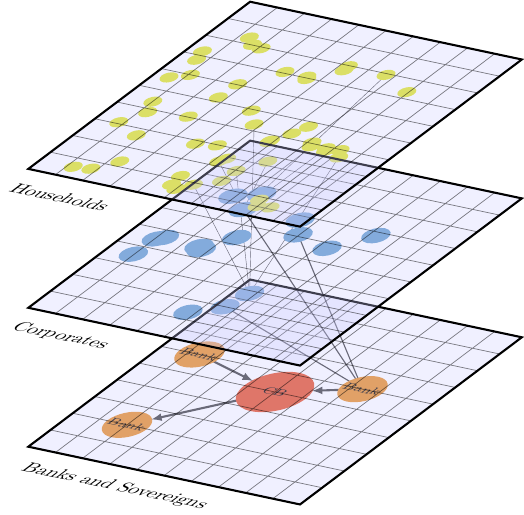
We develop an analytic framework that synthesizes current approaches to sustainable portfolio management in the context of addressing climate change. We discuss the different required information layers, approaches to emissions accounting, attribution and forward-looking limit frameworks implementing carbon budget constraints.

Reading Time: 3 min.

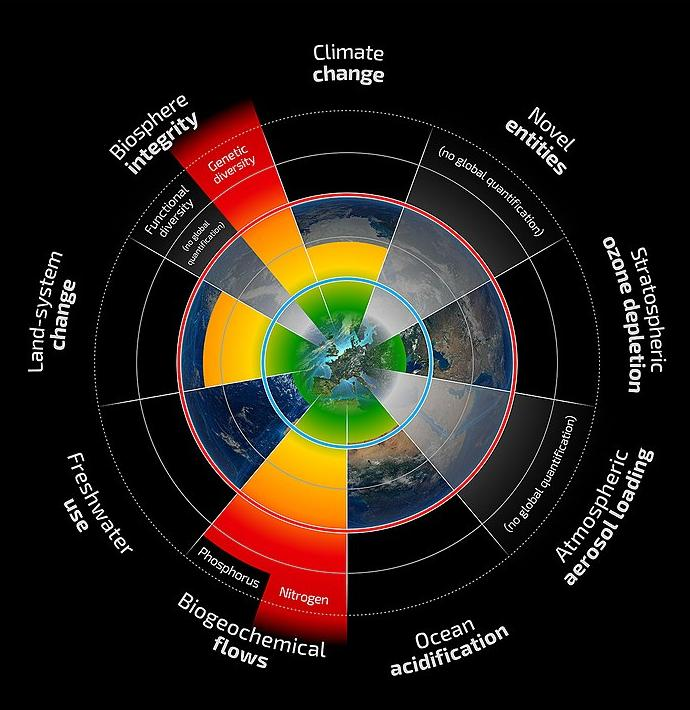
The frontpage graphic is adapted from Steffen et al. “Planetary Boundaries: Guiding human development on a changing planet”. Science (2015). The Planetary Boundaries concept was proposed in 2009 by this group of Earth system and environmental scientists. The group suggested that finding a “safe operating space for humanity” is a precondition for sustainable development. The framework is based on scientific evidence that human actions since the Industrial Revolution have become the main driver of global environmental change.

11, Sustainable Portfolio Management of GHG

11, Sustainable Portfolio Management of GHG

Reading Time: 0 min.

Open Risk White Paper 11: Sustainable Portfolio Management: Attribution and Allocation of Greenhouse Gas Emissions

We develop an analytic framework that synthesizes current approaches to sustainable portfolio management in the context of addressing climate change. We discuss the different required information layers, approaches to emissions accounting, attribution and forward-looking limit frameworks implementing carbon budget constraints.

10, Concentration, diversity in economic networks

10, Concentration, diversity in economic networks

Reading Time: 1 min.

Open Risk White Paper 10: Connecting the Dots: Concentration, diversity, inequality and sparsity in economic networks

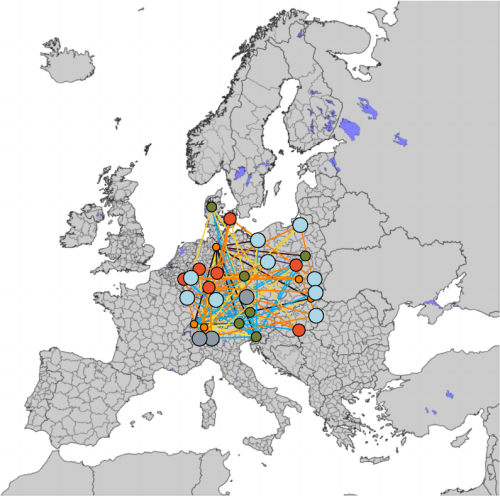
In this second Open Risk White Paper on Connecting the Dots we examine measures of concentration, diversity, inequality and sparsity in the context of economic systems represented as network (graph) structures. We adopt a stylized description of economies as property graphs and illustrate how relevant concepts can be represented in this language. We explore in some detail data types representing economic network data and their statistical nature which is critical in their use in concentration analysis. We proceed to recast various known indexes drawn from distinct disciplines in a unified computational context.

Introduction to the EBA NPL Templates

Introduction to the EBA NPL Templates

Reading Time: 3 min.

Summary

The Open Risk Academy course NPL270672 is a CrashCourse introducing the EBA NPL Templates.

Content

We start with the motivation for the templates and the domain of credit data (to which NPL data belongs). We discuss three core classes that capture the essence of lending operations from a lenders point of view (Counterparty, Loan, Collateral). Next we explore classes that capture events in the lending relationship lifecycle (which we term NPL Scenarios). We look into the main data types: elementary data types, choice lists, arrays and unstructured text. We close with discussing some more complex issues involving graph and timeseries data.

Equinox: a Platform for Sustainable Project Finance Risk Management

Equinox: a Platform for Sustainable Project Finance Risk Management

On Earth Day 2021 we are happy to launch Equinox, an open source platform supporting sustainable project finance

Reading Time: 5 min.

Motivation

Equinox is an open source platform that supports holistic risk management and reporting of Sustainable Finance (Sustainable Portfolio Management). The platform integrates geospatial information with applicable regulatory and industry standards from EBA, PCAF and Equator Principles to provide a holistic view of the footprint of both individual projects and portfolios, in particular of project finance investments.

Marking Pi Day 2021 With a Raspberry Pi Docker Image for OpenNPL

Marking Pi Day 2021 With a Raspberry Pi Docker Image for OpenNPL

We celebrate Pi Day 2021 releasing an ARM version of the openNPL platform that is suitable for the Raspberry Pi

Reading Time: 2 min.

Celebrating Pi Day 2021

Pi Day is celebrated every year on March 14th. The reason of course is that the day is denoted in some calendars as (3/14), which evokes of 3.14, the first three digits of “π”. A thin excuse maybe but sufficient for the true believers to join along! The occasion represents an annual opportunity for mathematics and science enthusiasts to recite the infinite charms of Pi, including its irrationality, to talk to friends and family about math and its uses, and, when everything else fails, simply eat pie.

Stress Testing of the Future - A view from 2031

Stress Testing of the Future - A view from 2031

What is the future of stress testing? We speculate on how stress testing might look like in 2031

Reading Time: 13 min.

EBA 2031

What is the future of stress testing?

To speculate on the future of Stress Testing we need first a basic definition what stress testing is. Broadly speaking, the goal of Stress Testing is to assess how a system would behave under adverse conditions that - while not the most likely outcome with the knowledge of today - are within the realm of the plausible.

Monte Carlo Simulation of the US Electoral College

Monte Carlo Simulation of the US Electoral College

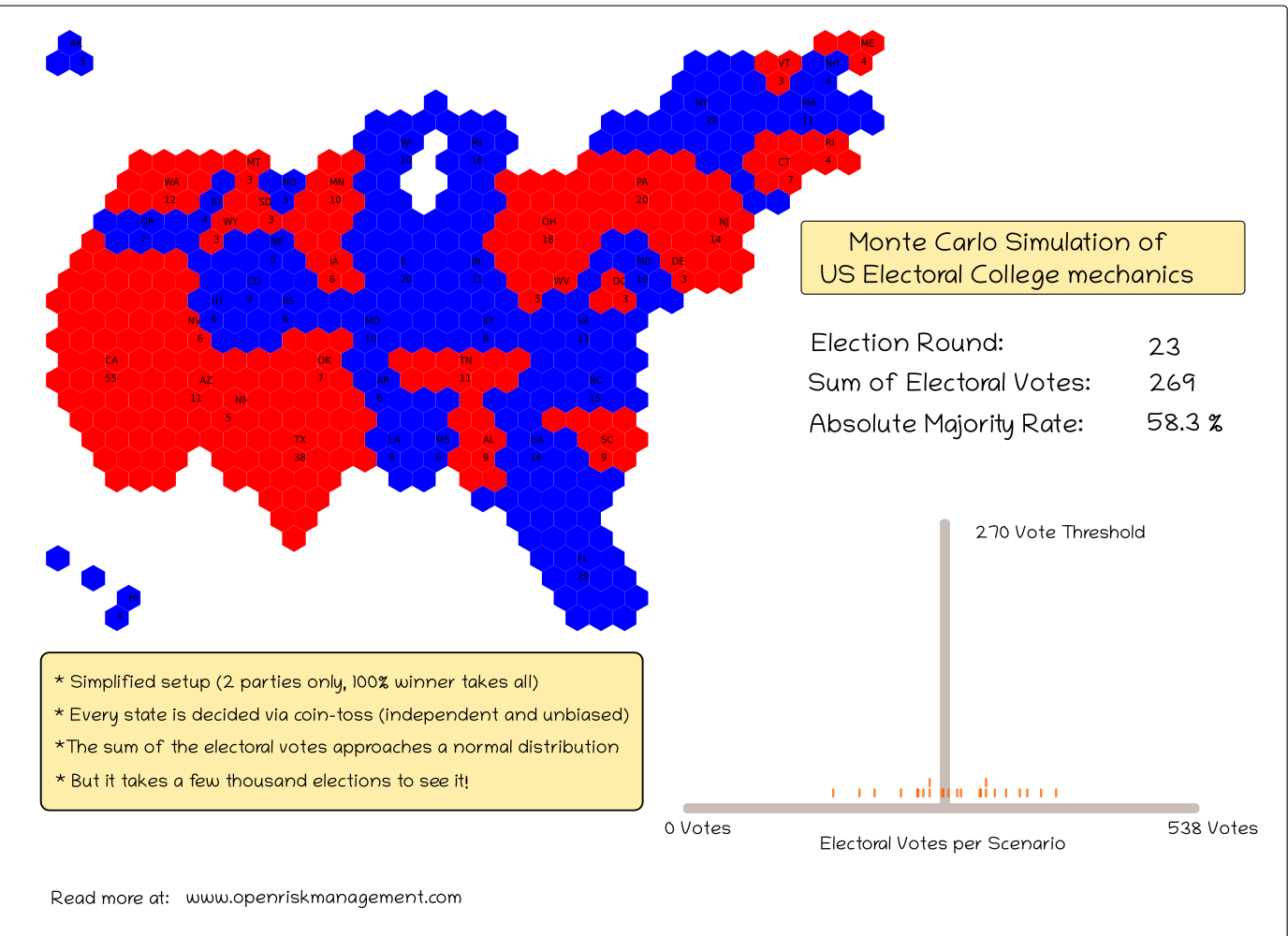
Using a simplified version of the rules of the US Electoral College system we illustrate how the use of Monte Carlo techniques allows exploring systems that show combinatorial explosion

Reading Time: 9 min.

The role of simulation in risk management and decision support

A Simulation is a simplified imitation of a process or system that represents with some fidelity its operation over time. In the context of risk management and decision support simulation can be a very powerful tool as it allows us to assess potential outcomes in a systematic way and explore what-if questions in ways that might otherwise be not feasible. Simulation is used when the underlying model is too complex to yield explicit analytic models (An analytic model is one can be “solved” exactly or with standard numerical methods, for example resulting in a formula).

openNPL 0.2 REST API implementation

openNPL 0.2 REST API implementation

The 0.2 release of openNPL exposes a RESTful API that provides easy standardized online access to NPL credit portfolio data conforming to the EBA NPL templates

Reading Time: 4 min.

openNPL 0.2 release

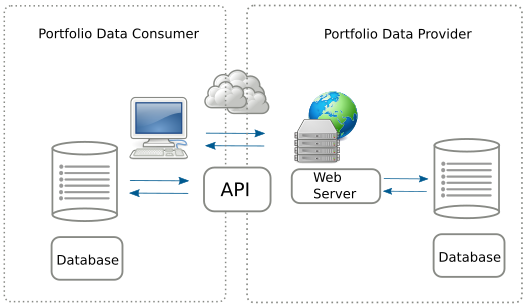
The open source openNPL platform supports the management of standardized credit portfolio data for non-performing loans. In this respect it implements the detailed European Banking Authority NPL loan templates. openNPL aims to be at the same time easy to integrate in human workflows (using a familiar web interface) and integrate into automated (computer driven) workflows.

openNPL now Available in Dockerized Form

openNPL now Available in Dockerized Form

Open Source, cloud based management of Non-Performing Loan data following the European Banking Authority's templates with just a few keystrokes!

Reading Time: 1 min.

openNPL now Available in Dockerized Form

Following up on the first release of openNPL the platform is now available to install using Docker. Running openNPL via docker is the installation option that simplifies the manual process (but a working docker installation is required!).

Docker Hub

You can pull the latest openNPL image from Docker Hub ( This method is recommended if you do not want to mess with the source distribution).

openNPL: Open Source NPL Platform - First Release

openNPL: Open Source NPL Platform - First Release

We introduce an open source platform that allows the easy management of non-performing loan data

Reading Time: 4 min.

Non-Performing Loans

The covid-19 crisis will certainly impact the concentration of Non-Performing Loans but given the special nature of this economic crisis compared (in particular) with the 2008 financial crisis it is unclear how precisely things will evolve.

In a previous post and white paper (OpenRiskWP07_022616) we discussed the importance of advancing open and transparent methodologies for managing the risks associated with such credit portfolios. Effective management of NPL is also a top regulatory priority. Following calls from the EU Commission and the EU Council to develop data templates to reduce information asymmetries between potential buyers and sellers of NPL, the European Banking Authority (EBA) has developed such standardised data templates.

08, Economic Networks as Property Graphs

08, Economic Networks as Property Graphs

Reading Time: 0 min.

Open Risk White Paper 8: Connecting the Dots, Economic Networks as Property Graphs

We develop a quantitative framework that approaches economic networks from the point of view of contractual relationships between agents (and the interdependencies those generate). The representation of agent properties, transactions and contracts is done in the context of a property graph. A typical use case for the proposed framework is the study of credit networks.

The limits and risks of risk limits

The limits and risks of risk limits

Reading Time: 2 min.

Limit frameworks are fundamental tools for risk management

A Limit Framework is a set of policies used by financial institutions (or other firms that actively assume quantifiable risks) to govern in a quantitative manner the maximum risk exposure permitted for an individual, trading desk, business line etc.

Visualization of large scale economic data sets

Visualization of large scale economic data sets

Reading Time: 3 min.

Visualization of large scale economic data sets

Economic data are increasingly being aggregated and disseminated by Statistics Agencies and Central Banks using modern API’s (application programming interfaces) which enable unprecedented accessibility to wider audiences. In turn the availability of relevant information enables more informed decision-making by a variety of actors in both public and private sectors. An excellent example of such a modern facility is the European Central Bank’s Statistical Data Warehouse (SDW), an online economic data repository that provides features to access, find, compare, download and share the ECB’s published statistical information.

Machine learning approaches to synthetic credit data

Machine learning approaches to synthetic credit data

Reading Time: 9 min.

The challenge with historical credit data

Historical credit data are vital for a host of credit portfolio management activities: Starting with assessment of the performance of different types of credits and all the way to the construction of sophisticated credit risk models. Such is the importance of data inputs that for risk models impacting significant decision-making / external reporting there are even prescribed minimum requirements for the type and quality of necessary historical credit data.

Release 0.4 of transitionMatrix adds Aalen-Johansen estimators

Release 0.4 of transitionMatrix adds Aalen-Johansen estimators

Reading Time: 0 min.

Release of version 0.4 of the transitionMatrix package

Further building the open source OpenCPM toolkit this release of transitionMatrix features:

  1. Feature: Added Aalen-Johansen Duration Estimator
  2. Documentation: Major overhaul of documentation, now targeting ReadTheDocs distribution
  3. Training: Streamlining of all examples
  4. Installation: Pypi and wheel installation options
  5. Datasets: Synthetic Datasets in long format

Enjoy!

Comparing IFRS 9 and CECL provision volatility

Comparing IFRS 9 and CECL provision volatility

Reading Time: 8 min.

Is the IFRS 9 or CECL standard more volatile? Its all relative

Objective

In this study we compare the volatility of reported profit-and-loss (PnL) for credit portfolios when those are measured (accounted for) following respectively the IFRS 9 and CECL accounting standards.

The objective is to assess the impact of a key methodological difference between the two standards, the so-called Staging approach of IFRS 9. There are further explicit differences in the two standards. Importantly, given the standards are not prescriptive, it is very likely that there will be material differences in interpretation and implementation of the principles (for example on the nature and construction of scenarios). In this study we perform a controlled comparison adopting a ‘ceteris-paribus’ mentality: We assume that all other implementation details are similar and we focus on the impact of the Staging approach.

Credit Portfolio PnL volatility under IFRS 9 and CECL

Credit Portfolio PnL volatility under IFRS 9 and CECL

Reading Time: 2 min.

Credit Portfolio PnL volatility under IFRS 9 and CECL

Objective

We explore conceptually a selection of key structural drivers of profit-and-loss (PnL) volatility for credit portfolios when profitability is measured following the principles underpinning the new IFRS 9 / CECL standards

Methodology

We setup stylized calculations for a credit portfolio with the following main parameters and assumptions: