Course Catalog

Overview of Available Courses

In this page you can find the Open Risk Academy Courses that are currently available with a Self-Enrollment option.

Can't find a suitable course? Use the course request form and subject to resources and subject-matter fit we will try to accommodate!

General Courses

Data Science

Data Engineering

Financial Literacy

Risk Management

Sustainable Finance

Green Public Procurement

  • Green Public Procurement Online Game

Risk Modeling using Python

Credit Portfolio Management

Credit Concentration Courses

Mortgage Modeling

Banking Regulation


Detailed Descriptions


Working with Large Matrices using Command Line Tools
Reading Time: 3 min.

Working with Large Matrices using Command Line Tools

CLI Tools for Data Science

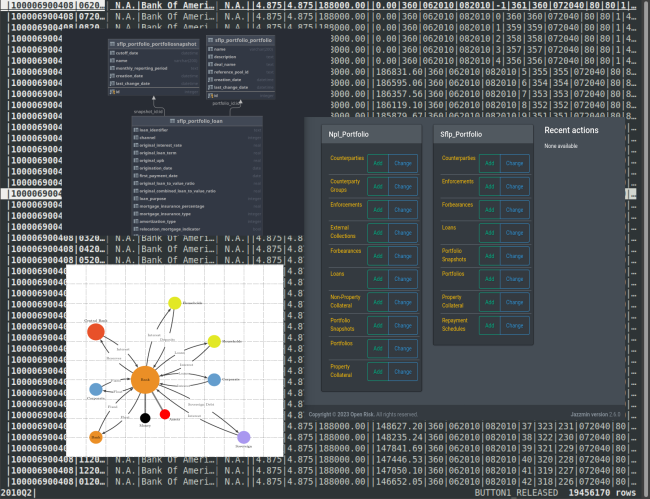
This course is an Open Risk Academy CrashCourse introduction to using Linux command line tools to work (in particular) with large text files encoding numerical data in matrix format. A central role is played by awk, the venerable UNIX pattern-matching language and tool.

An Introduction to the Copernicus Satellite Data Ecosystem

Reading Time: 2 min.

Copernicus

Course Content:

This course is an introduction the Copernicus Satellite Data Ecosystem. It covers the following topics:

  • Getting to know the Copernicus Programme
    • Overview of the Copernicus Programme
    • Further Resources
  • The Copernicus Data Ecosystem
    • Copernicus Data Resources
  • Tools and Resources
    • Platforms, Tools and API’s
  • A worked out example
    • Using the Python OpenEO API

Who Is This Course For:

Data Scientists / Data Engineers in any Domain that need to use satellite data

Crash Course on Input-Output Model Mathematics

Reading Time: 1 min.
Graphic

Summary

A brief review of the linear algebra and matrix theory concepts underpinning standard environmentally extended input-output models.

Content

This brief introduction in Input-Output Model mathematics discusses the basic elements of linear algebra that are necessary to understand the standard Input-Output models, including their Environmental impact extensions.

Matrix theory is the main subject covered here as it is the most dominant mathematical tool used in this area (though other parts of mathematics do find applications in Input-Output analysis). The focus is on the notation and mathematical objects commonly used, not the economic interpretation or any mathematical proofs.

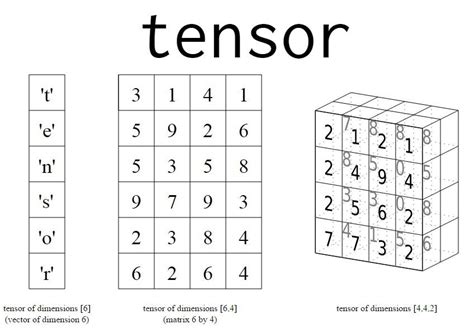
Deep Dive Course on Tensor calculations with Eigen

Reading Time: 2 min.

Tensor

Course Content:

This course is an introduction to Tensor calculations with Eigen, a popular C++ library for working with numerical arrays and linear algebra. It covers the following topics:

  • We learn the concept and techniques of the Eigen Tensor class
  • How to declare, initialize Tensors of various ranks and types and how to access Tensor elements
  • Elementary unary and binary operations involving Tensors
  • More complex operations (reductions, contractions)
  • Modifying the shape of Tensors

Who Is This Course For:

Developers in any Domain that need to use higher-dimensional numerical data containers

Input-Output Model Interactivities

Reading Time: 1 min.

Introduction

This is a short introductory course on Input-Output analysis that focuses on stylized interactive calculations that can be performed directly within the online reading sections.

The level of the course is introductory. There are no significant mathematical nor computer science prerequisites. The course should be useful for anybody wishing to obtain insights into the flow of the basic calculations behind modern large-scale Environmentally Extended Input-Output Models.

The Climate Dictionary Quiz

Reading Time: 0 min.
Graphic

Summary

A multipe-choice Quiz based on the Climate Dictionary developed by the United Nations Development Programme. The quiz provides an educational tool to enable deeper understanding of essential terminology around Climate Change and Climate Risk.

Content

The quiz consists of circa 65 questions of multiple choice type. The objective is to enable anybody interested in climate change to benchmark their knowledge of these key terms.

The Green Public Procurement Challenge (Online Game)

Reading Time: 0 min.
Graphic

The GPP challenge game is hosted in the sustainability.town, an online platform dedicated to hands-on demonstrations and applications of Sustainable Portfolio Management concepts and methodologies. It is part of a new series of serious games covering a wide range of important concepts in an engaging manner.

Course Level and Type

Introductory Level Core Level Advanced Level
Non-Technical GPP01079
Technical

Enroll and Get Started with GPP01079

Mathematical Representations of Credit Portfolio Data

Mathematical Representations of Credit Portfolio Data

What do we mean by credit data? This post is a discussion around mathematical terminology and concepts that are useful in the context of working with credit data, taking us from network graph representations of credit systems to commonly used reference data sets

Reading Time: 1 min.

Course Objective

Digging into the meaning of credit data collections, the logic that binds them together towards understanding what they can be used for and what limitations and issues they may be affected by, this new course in the Credit Portfolio Management category explores a new angle to look at an old practice.

Input-Output Models as Graph Networks

Input-Output Models as Graph Networks

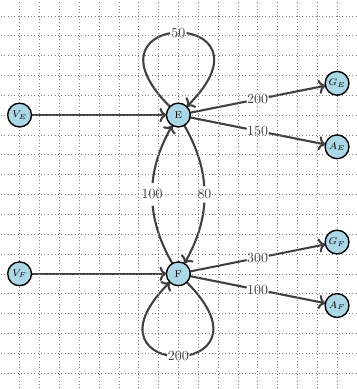
We discuss the relation of economic input-output models with graph theory and networks

Reading Time: 1 min.

Course Objective

The objective of the course is to discuss the relation of economic input-output models with graph theory and networks.

Academy CrashProgram Demo

Reading Time: 0 min.
Demo Course Logo

Summary

This crash course is an introduction to the main elements of an Academy course (it is a course about courses!). The course takes less than an hour to complete. It is recommended to new users that are not familiar with eLearning environments.

How Does The Course Help

You can also use the course to test whether your can get full access to the academy courses using your particular device / browser.

Introduction to the Open Risk Manual

Reading Time: 0 min.

Summary

This short course is an introduction to the Open Risk Manual, covering the following topics:

  • Background Information
  • A Brief User Manual
  • More Advanced Uses
  • Mobile Use
  • Contributing to the Manual

Course Level and Type

Introductory Level Core Level Advanced Level
Non-Technical GEN13054
Technical

Enroll and Get Started with GEN13054

Crossword Puzzles

Reading Time: 0 min.

Summary

Open Risk Crossword Puzzles: A collection of crossword puzzles build around specific themes

Content

  • Non-Performing Loan Crossword Puzzle Game
  • Sustainable Finance Crossword Puzzle Game
  • Cyber Risk Crossword Puzzle Game
  • Fintech Crossword Puzzle

Course Level and Type

Introductory Level Core Level Advanced Level
Non-Technical QUI29052
Technical

Enroll and Get Started with QUI29052

An overview of graph methods in data science

Reading Time: 1 min.
Python is the swiss knife of modern programming languages and a prime candidate to be also the swiss knife for risk modelling

Summary

This course is a CrashProgram (short course) introducing the different ways in which the graph concept enters various data science applications. The course is at an introductory technical level. It requires comfort with mathematical notation and (optionally) ability to run the provided python code with various graph examples. Reviewing the very diverse uses of graph structures will reveal the richness of graphs as data science tools.

21 Ways to Visualize a Timeseries

Reading Time: 3 min.

What this course is about (and what it isn’t)

With the ever more widespread adoption of Data Science tools (defined loosely as the intensive use of data in decision-making), there is strong interest in Visualization as an effective means for humans to understand information at various stages of the data lifecycle.

There is a large variety of open source data visualization tools which can produce an ever more bewildering variety of visualization types:

Intro to Concentration Measurement using Python

Reading Time: 1 min.
Python is the swiss knife of modern programming languages and a prime candidate to be also the swiss knife for risk modelling

Summary

This course is a CrashProgram in the use of python for risk modelling purposes, in particular credit concentration measurement.

Who Is This Course For

There is little or no prior knowledge of concentration risk measurement but general background in credit risk management is useful for context.

Exploratory Risk Data Analysis

Reading Time: 1 min.
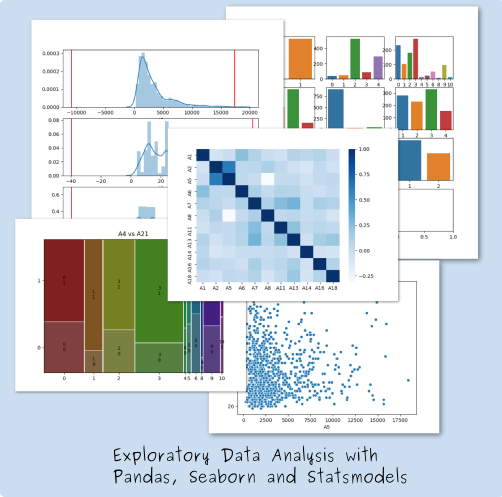
Exploratory Data Analysis Visualizations

Summary

This course is a CrashProgram (short course) introducing exploratory data analysis.

Prerequisites

The course can be pursued on a standalone basis. It is advisable to pursue the course after DAT31046 (Risk Data Review) which discusses a review of the data from a data quality validation perspective.

Getting Started with Open Source

Reading Time: 0 min.
Python is the swiss knife of modern programming languages and a prime candidate to be also the swiss knife for risk modelling

Summary

This course collects resources and activities to facilitate those involved in open source risk modelling projects.

Course Level and Type

Introductory Level Core Level Advanced Level
Non-Technical
Technical GEN13031

Enroll and Get Started with GEN13031